
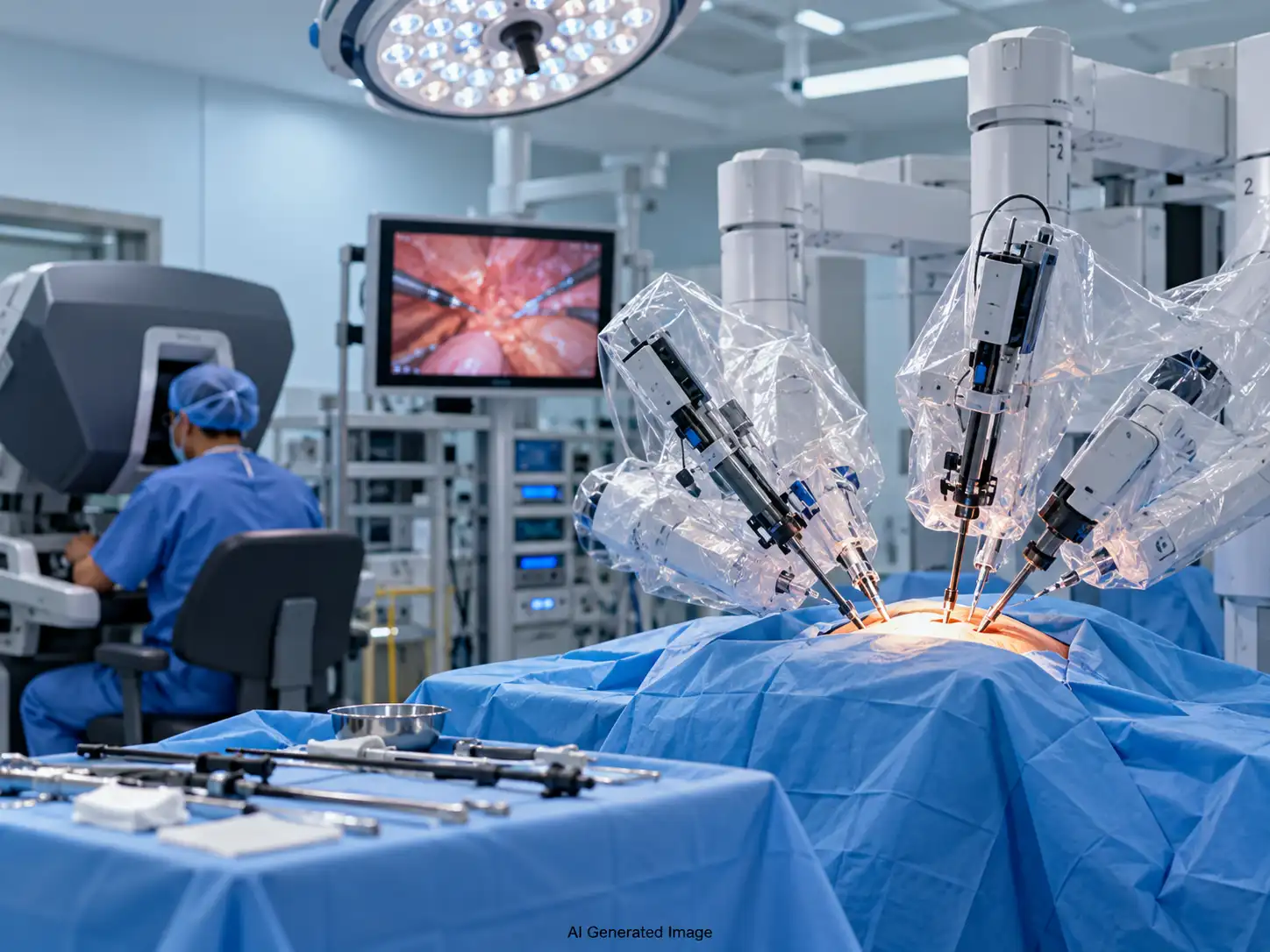
“My doctor suggested robotic surgery, but who is actually operating?” This is a common concern among patients considering robotic gynaecological surgery.
The surgeon controls the procedure using a robotic system; the robot does not operate independently. The approach may be considered for conditions such as uterine fibroids and other gynaecological problems.
Suitability depends on the condition, fibroid size and location, medical history, and the planned procedure. Understanding how the system works, its limitations and the potential risks can help patients discuss their options with their surgeon.
This article explains robotic surgery safety, how fibroid size affects surgical decisions, and why the uterus is sometimes removed in pieces during minimally invasive surgery.
Does the Robot Operate by Itself?
No. A qualified gynaecological surgeon controls the robotic system throughout the procedure.
- Surgeon Control: The surgeon directs every instrument movement.
- Console Operation: A specialised console provides magnified, 3D high-definition views.
- Precise Movements: Robotic instruments translate the surgeon’s hand movements with enhanced dexterity.
- Clinical Decisions: The surgeon makes all decisions; the robot cannot act independently.
What Does the Robot Actually Do During Surgery?
The robot acts as a highly advanced extension of the surgeon’s hands. The system translates the surgeon’s complex movements into real-time, micro-precise actions inside the patient’s pelvis to perform procedures like hysterectomies or fibroid removals.
How Does the Surgeon Control the Robotic Arms?
The surgeon sits at a specialised computer console a few feet away from the patient. Using sensitive, ergonomic hand controls and foot pedals, the surgeon guides the robotic arms. The system perfectly mimics the surgeon's hand, wrist, and finger movements in real time.
Why Do Surgeons Use It?
Surgeons utilise this technology for its significant performance advantages over traditional methods:
- 3D Magnified View: A high-definition camera provides a clear, three-dimensional, deeply magnified view of the pelvic organs.
- Wristed Instruments: The tiny robotic instruments bend and rotate with 7 degrees of freedom, far exceeding the range of motion of human hands.
- Steadier Movement: The software automatically filters out natural hand tremors, ensuring stable, precise incisions.

What Are the Biggest Myths About Robotic Surgery?
Robotic surgery is often misunderstood. The following comparison separates common myths from the facts.
| Myth | Fact |
| “The robot makes decisions independently.” | The surgeon controls the instruments and surgical movements. |
| “Equipment failure automatically puts the patient in danger.” | The team follows safety protocols and may switch to another surgical approach if needed. |
| “The technique is experimental.” | Robotic surgery is an established option for selected procedures, although suitability varies. |
| “It is always better than other methods.” | Benefits and risks differ by procedure, patient and surgical expertise. |
Robotic surgery is not automatically safer or more effective than laparoscopic or open surgery. The appropriate method depends on the clinical situation, and the surgeon should explain the available options and their relative risks.
Is Robotic Surgery Safe for Every Fibroid? How Size, Number and Location Matter
No. The decision depends on the fibroids’ size, number, and location; the uterus’s overall size; symptoms; fertility plans; and the surgeon’s assessment.
Does the Size of the Fibroid Matter?
Yes. While skilled surgeons can robotically remove large fibroids—often up to 10–12 centimetres—extremely massive fibroids can still pose challenges.
Very large masses restrict the necessary workspace inside the abdomen and make it difficult to safely manipulate or extract the tissue through small incisions.
Does Having Many Fibroids Change the Plan?
Yes. While removing a few fibroids robotically is routine, dealing with multiple fibroids (typically more than 4 or 5) significantly extends surgery and anaesthesia time. It also increases blood loss and requires multiple incisions in the uterine wall, which can weaken it.
Does the Location of the Fibroid Matter?
Yes.
- In the muscle wall (intramural) or outside the uterus (subserosal): These are ideal for the robotic approach.
- Inside the cavity (submucosal): These are usually better treated hysteroscopically through the cervix, without abdominal incisions.
- In the cervix or broad ligament: These sit near critical structures like major blood vessels and the ureters, requiring advanced robotic expertise to navigate safely.
A gynaecologist may use ultrasound or MRI to assess the fibroids and plan surgery. For patients with larger fibroids, discuss the surgical approach individually, including the potential benefits and limitations of robotic surgery.
Why Is the Uterus Sometimes Removed in Small Pieces Inside a Bag?
To allow a large organ to fit through tiny abdominal incisions while completely preventing the spread of potentially cancerous cells. This specific surgical technique is called contained morcellation.
- Enabling Keyhole Surgery: When a large uterus or extensive fibroids cannot safely fit through small laparoscopic incisions, surgeons must divide the organ into smaller pieces to extract it without resorting to a large abdominal incision.
- Tissue Containment: Surgeons perform this fragmentation inside a medical-grade containment bag to prevent tissue fragments, cells, or fluid from spilling into the pelvic and abdominal cavities.
- Preventing Cancer Spread: The bag's primary purpose is safety; if the tissue contains an undetected malignancy, cutting it freely could scatter cancer cells and drastically worsen the patient's prognosis.
- Careful Screening: Because rare, hidden cancers—like uterine leiomyosarcoma—cannot always be detected beforehand, doctors thoroughly evaluate patients before surgery to assess underlying risks.
- Tailored Extraction: Based on this preoperative screening, surgeons carefully select the safest method to balance the rapid recovery of minimally invasive surgery with strict oncological safety.
What Does the Doctor Check Before Deciding on Robotic Surgery?
The doctor reviews the patient's medical history, symptoms, test results, and overall fitness to determine whether robotic surgery is appropriate.
- Medical history: Previous operations, including Caesarean sections.
- Imaging: Ultrasound or MRI to assess fibroids.
- Cervical screening: Pap smear when indicated.
- Endometrial assessment: Testing when clinically appropriate.
- Blood tests: Haemoglobin and other relevant results.
- General fitness: Anaesthetic assessment and existing conditions.
- Fertility plans: Whether future pregnancy is desired.
The assessment helps the team select a suitable procedure and discuss alternatives, risks and expected recovery.
What Are the Risks, and When Could Surgery Be Converted to Open?
Robotic gynaecological surgery is minimally invasive but still carries surgical and technical risks.
- Organ Injury: Accidental damage to the bladder, bowel, ureters or blood vessels.
- Bleeding: Blood loss may occur during or after surgery.
- Infection: Surgical wounds or pelvic tissues may become infected.
- Blood Clots: Surgery and prolonged positioning can increase clot risk.
- Anaesthesia and Positioning: Head-down positioning may affect heart or lung function.
- Technical Malfunctions: Robotic systems or vision equipment may rarely fail.
Surgeons may convert robotic surgery to open surgery when necessary for patient safety.
- Severe Adhesions: Scar tissue may restrict safe instrument movement.
- Large Tumours: Size or location may complicate removal.
- Uncontrolled Bleeding: Open surgery may allow faster control of bleeding.
- Poor Visibility: Inflammation or anatomy may obstruct the surgical view.
- Heart or Lung Concerns: Patients may not tolerate the positioning required for surgery.
- Equipment Failure: Unresolved technical problems may require conversion.
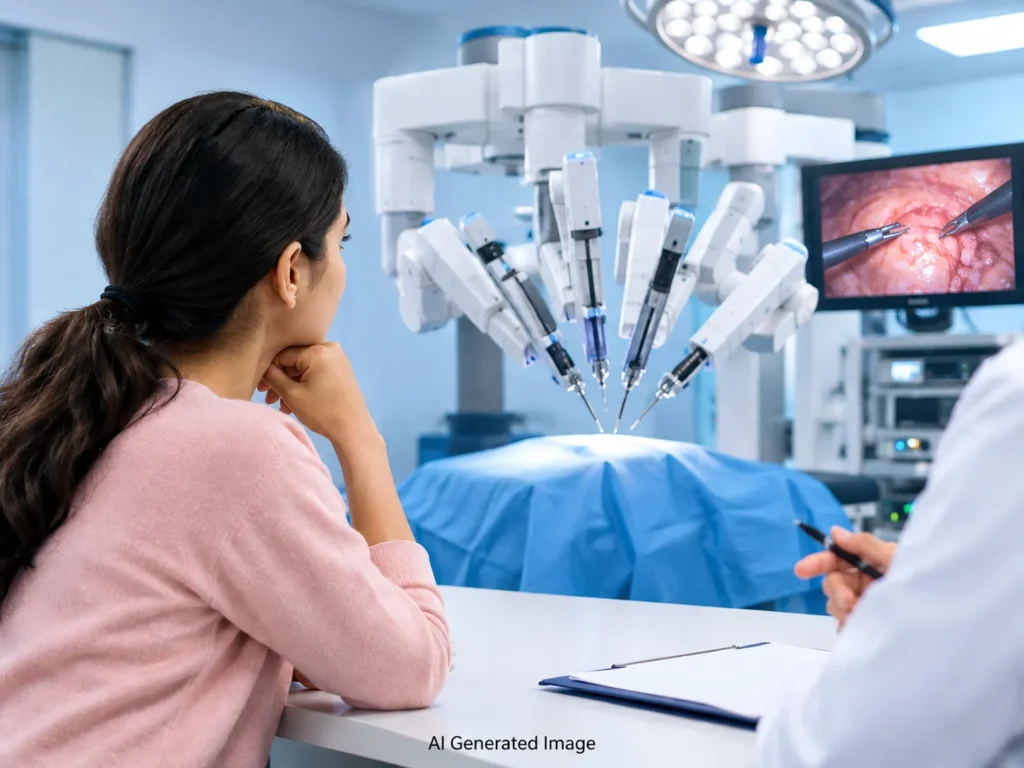
Is Robotic Surgery Right for You?
Robotic gynaecology surgery may suit some patients, but not everyone.
Discuss your diagnosis, alternatives, potential risks, and recovery expectations with your gynaecologist before deciding.
All set to take the next step? Book a consultation today!
Frequently Asked Questions
Does the robot perform surgery by itself?
No. The surgeon controls every instrument movement and makes all surgical decisions throughout the procedure.
Is robotic surgery safe for hysterectomy?
It can be suitable for selected patients. Safety depends on the patient's condition, the surgeon's experience and the available alternatives.
What happens if the robot stops working during surgery?
The team follows safety protocols and may continue using another approach or convert to conventional surgery, depending on the circumstances.
Is robotic surgery better than laparoscopic surgery?
Not always. The choice depends on the procedure, the patient's condition and the surgeon's expertise.
Is there a size limit for fibroids in robotic surgery?
No single size limit applies to everyone. Suitability depends on fibroid size, number, location and surgical complexity.
Can multiple fibroids be removed robotically?
Yes, in some cases. The decision depends on their size, number, location, and whether surgeons can preserve healthy uterine tissue.
Why is the uterus cut into pieces during surgery, and is it safe?
Surgeons may divide it when they cannot remove it intact through a small incision. Containment can reduce tissue spread but cannot eliminate all risks.
Does robotic surgery increase the risk of cancer spreading?
The system itself does not cause cancer. However, fragmenting an unsuspected cancer may spread cancer cells, so careful assessment and removal planning are important.
How many days will I stay in the hospital after robotic surgery?
Some patients leave the same day or the following day. Others need a longer stay, depending on recovery, complications, and individual health.
Is robotic surgery painful, and how long is recovery?
Pain and recovery vary. Minimally invasive procedures may allow faster recovery than open surgery, although discomfort, fatigue, and activity restrictions can persist.
Can robotic surgery be converted to open surgery?
Yes. Conversion may be necessary if bleeding, poor visibility or unexpected findings make continuing with the planned approach unsafe.
Who should not have robotic surgery?
Patients whose health, surgical complexity or clinical needs make the approach unsuitable may require an alternative. The gynaecologist assesses individual risks before recommending surgery.
………………………………………………………………………………………………………
Medical Disclaimer: This article is for educational purposes only and does not replace professional medical advice, diagnosis or treatment