

The two weeks after an embryo transfer can feel endless. You check every sensation and wonder what it means. The beta hCG blood test gives you the first reliable answer. This guide explains hCG levels after embryo transfer in plain language. You will see typical ranges, how fast the numbers should rise and when to call your clinic. If you are starting your fertility journey, our infertility treatment in Kolkata page explains how we support you at each step.
What Is hCG and Why Does Your Clinic Test It After Embryo Transfer?
HCG stands for human chorionic gonadotropin. Cells that later form the placenta make this hormone after the embryo implants in the uterus.
The level rises quickly in early pregnancy. A blood test measures the exact amount, so it gives a more accurate and earlier result than a home urine test. Your clinic uses it to confirm implantation and to track early progress.
Not sure whether IVF is your best route? Read our guide on IVF vs IUI.
10 Key Facts About HCG Levels After Embryo Transfer
When Should You Take the Beta hCG Test After Transfer?
Most clinics schedule the blood test 9 to 14 days after transfer. Day 5 blastocyst transfers often use an earlier date than day 3 transfers. Your clinic gives you a specific date, so follow it.
Testing too early can give a false negative. The embryo needs time to implant and produce enough hormone to measure.
What Is a Normal hCG Level After Embryo Transfer?
No single number applies to everyone. Many clinics treat a result above about 25 mIU/mL as positive. Labs differ, so your clinic’s reference range matters most.
Doctors care about the trend as much as the first value. They compare it with a second test taken two to three days later.
What Do Typical hCG Ranges Look Like by Day?
This table shows broad, approximate ranges after a day 5 blastocyst transfer. Treat it as a general guide only.
| Days after transfer | Approximate hCG (mIU/mL) |
|---|---|
| 9 to 10 days | 25 to 200 |
| 12 days | 100 to 800 |
| 14 days | 200 to 1,500 or higher |

Healthy pregnancies fall well outside these ranges too. Labs, units and embryo age all change the numbers.
How Fast Should hCG Rise After a Positive Test?
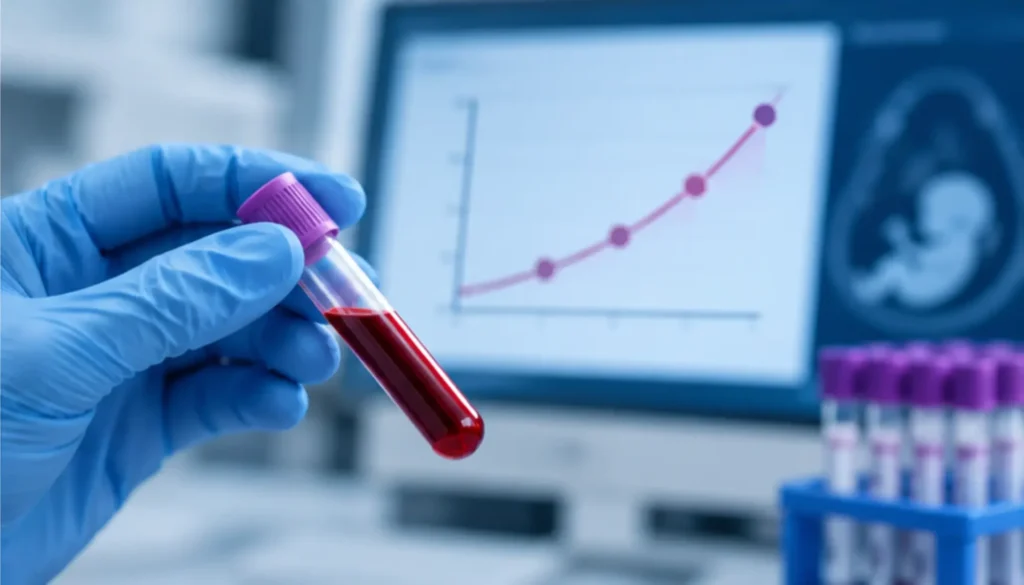
In early pregnancy, hCG often roughly doubles every 48 to 72 hours. Your doctor repeats the test to check this pattern.
A rise that matches the pattern is reassuring. A slower rise does not always signal a problem, but your doctor will watch it closely.
Do Day 3 and Day 5 Transfers Show Different Levels?
Yes, timing differs. A day 5 blastocyst usually implants sooner, so hCG appears earlier. A day 3 embryo needs a little more time.
Compare your result with the range for your transfer type. Comparing yourself with someone who had a different transfer causes needless worry.
Can You Have a Healthy Pregnancy With a Low hCG?
Sometimes, yes. Some women start with a low level and still progress well, especially when the level keeps rising.
Doctors judge the pattern, not one value. They also look at symptoms and the first ultrasound.
Can Home Pregnancy Tests Mislead You After Transfer?
They can. A test taken too early may read negative even when implantation has happened. A trigger shot given before retrieval can also linger and cause a false positive for several days.
Wait for your blood test. It avoids the stress of conflicting results.
Does a Frozen Embryo Transfer Change hCG Numbers?
Frozen and fresh transfers can both produce healthy levels. Hormone support and timing differ between the two, so your clinic’s schedule matters more than any general chart.
Ask your doctor which reference range applies to your cycle.
Do Twins Cause Higher hCG Levels?
Twin pregnancies often show higher hCG, but a high number alone does not confirm twins. Many single pregnancies also produce high levels.
An ultrasound gives the real answer, usually a few weeks after a positive blood test.
What Does a Slow-Rising or Falling hCG Mean?
A falling level can point to a biochemical pregnancy, which is a very early loss. A rise that is too slow can sometimes signal an ectopic pregnancy, where the embryo implants outside the uterus.
Your doctor will repeat the test and may order an ultrasound. If you have repeated losses, our article on recurrent miscarriage causes, tests and next steps explains what comes next.
Why Do hCG Levels Vary So Much Between Women?
Many factors shape your numbers. The exact day of implantation matters. So do the embryo’s quality, the lab’s method and your own physiology.
Age also plays a role in fertility and outcomes. Read how age affects female fertility to understand why your doctor tailors each plan.
For background on how hCG works, see MedlinePlus on the hCG blood test.
When Should You Worry About Your hCG Levels?
Call your clinic right away if you notice:
- Severe or one-sided abdominal pain
- Heavy bleeding that soaks a pad within an hour
- Dizziness or fainting
- Shoulder pain along with abdominal pain
These can signal an ectopic pregnancy or another emergency. The American College of Obstetricians and Gynecologists offers clear information on early pregnancy loss if you want to read more.
A falling hCG often brings grief. Allow yourself time and lean on your partner, family or counsellor.
What Should You Do While You Wait for Your Result?
- Skip early home tests.
- Take every medicine on schedule, including progesterone.
- Keep light daily activity, such as short walks.
- Avoid heavy lifting and strenuous exercise.
- Ask a partner or friend to stay with you on result day.
If a positive result arrives, your care continues. Pregnancies after IVF often need closer monitoring, so learn about high-risk pregnancy care in Kolkata.
Frequently Asked Questions
What hCG level confirms pregnancy after IVF?
Many clinics call a level above about 25 mIU/mL positive. Your clinic’s range and the repeat test decide the final answer.
How much should hCG rise every 48 hours?
It often roughly doubles every 48 to 72 hours in early pregnancy. Your doctor interprets the exact pattern.
Can I get a positive home test but a negative blood test?
Yes. A leftover trigger shot or an early loss can cause this. Trust the blood test and call your clinic.
What happens if my hCG level drops?
Your doctor repeats the test and may order an ultrasound. A falling level often means the pregnancy will not continue.
When is the first ultrasound after a positive hCG?
Usually about two to three weeks after the positive test. Your doctor sets the exact date.
Conclusion
One hCG number never tells the full story. The trend, your symptoms and your ultrasound matter more. Follow your clinic’s schedule, avoid comparing your numbers with others and call early when something worries you.
Need personal guidance? Contact us to book a consultation.