

Mild cramps or a little spotting in early pregnancy are often harmless, so it is easy to dismiss them. Sometimes, though, these symptoms point to an ectopic pregnancy, a condition that needs prompt medical evaluation. Understanding ectopic pregnancy symptoms and treatment helps you act early and calmly. Sudden severe abdominal pain, fainting, collapse or shoulder-tip pain may signal internal bleeding. If you experience these, go to the nearest emergency department immediately, rather than waiting for a routine appointment.
What Is an Ectopic Pregnancy?
An ectopic pregnancy is a pregnancy that implants outside the uterine cavity, most often in a fallopian tube. It cannot develop into a viable pregnancy and can be dangerous if the tube ruptures. Early diagnosis allows safer treatment.
In a normal pregnancy, the fertilised egg travels along the fallopian tube and settles in the lining of the uterus. In an ectopic pregnancy, the egg implants elsewhere. More than 90% of ectopic pregnancies occur in a fallopian tube, because the tube is narrow and cannot stretch like the uterus.
Less often, a pregnancy outside the uterus implants in the ovary, cervix, a caesarean scar, or the abdomen. These are rarer, and specialists manage them.
Doctors cannot move an ectopic pregnancy into the uterus, and it cannot continue safely. This is nobody’s fault. It is a medical condition, not the result of anything you did or did not do.
What Are the Early Symptoms of Ectopic Pregnancy?
Symptoms usually appear between the fourth and twelfth weeks of pregnancy, but timing and severity vary. Typical early signs of ectopic pregnancy include one-sided pelvic pain, unusual bleeding and a missed period. Some women have few or no symptoms at first.
One-Sided Lower Abdominal or Pelvic Pain
Pain is often felt low in the abdomen, commonly on one side. It may be dull, sharp, cramping, or come and go. Pain can also be central or vary in intensity, so its location alone cannot confirm or exclude the diagnosis.
Vaginal Spotting or Unusual Bleeding
Bleeding may be light, dark brown or watery, and it often differs from a normal period. Some women bleed very little despite a serious problem, so the amount of bleeding is not a reliable guide.
Missed Period or Positive Pregnancy Test
An ectopic pregnancy can look like a normal early pregnancy. You may have a missed period, nausea or breast tenderness, and a positive test. A positive result does not tell you where the pregnancy is growing.
Dizziness, Weakness or Feeling Unwell
Light-headedness, weakness, bowel or bladder discomfort and general unwellness can occur. These are common in early pregnancy, so they are most concerning when combined with pain or bleeding.
Which Ectopic Pregnancy Symptoms Require Emergency Medical Attention?
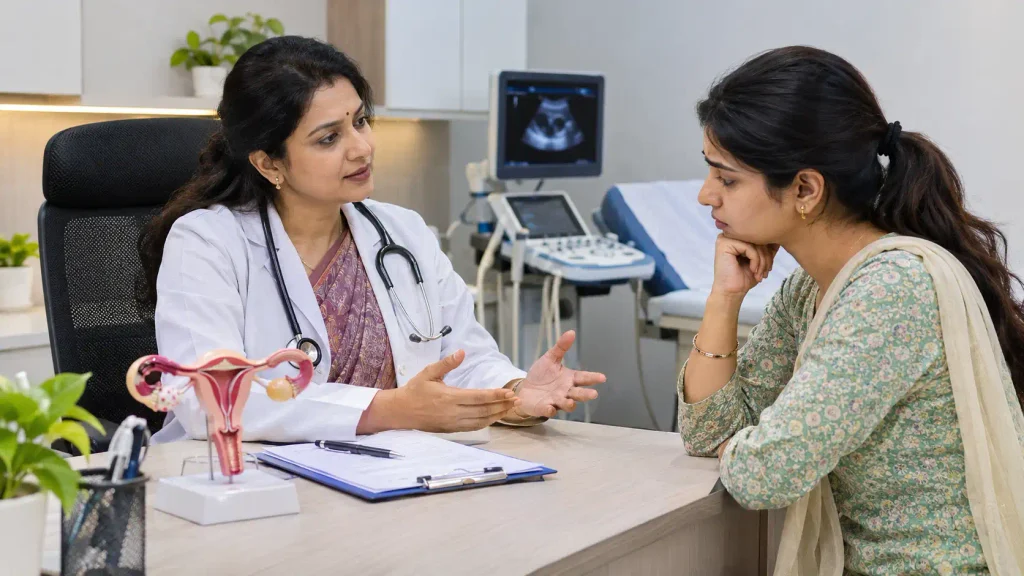
A ruptured ectopic pregnancy is a medical emergency. Seek immediate care for sudden severe pain, shoulder-tip pain, fainting or collapse, or marked weakness and pallor. Internal bleeding can be serious even when little blood is visible from the vagina.
Go to the nearest hospital emergency department, or call 112 or your local ambulance service, if you have:
- Sudden, severe abdominal or pelvic pain.
- Shoulder-tip pain, particularly alongside other symptoms.
- Fainting, collapse or severe dizziness.
- Marked weakness, pale or clammy skin, or a racing heartbeat.
- Severe pain with any bleeding or circulatory symptoms.
Shoulder-tip pain can occur when blood irritates the diaphragm. Do not wait for heavy vaginal bleeding before seeking help, because the bleeding is often internal. Do not drive yourself if you feel faint.
What Causes an Ectopic Pregnancy and Who Is at Risk?
The exact cause is often unclear. Ectopic pregnancy is more likely when damage or inflammation affects the fallopian tube’s structure or function. Many women with an ectopic pregnancy have no identifiable risk factor, so it can happen to anyone.
Recognised risk factors include:
- A previous ectopic pregnancy.
- Pelvic inflammatory disease or certain sexually transmitted infections.
- Fallopian tube damage or previous tubal surgery.
- Pregnancy with an intrauterine device (IUD) in place.
- Assisted reproductive treatments, in some circumstances.
- Smoking.
- Increasing maternal age, especially over 35.
These factors raise the likelihood but do not make an ectopic pregnancy inevitable. Pregnancy with an IUD is uncommon, but if it happens, a greater proportion of those pregnancies are ectopic.
How Do Doctors Diagnose an Ectopic Pregnancy?
Doctors combine your symptoms, an examination, blood tests and a transvaginal ultrasound. No single test is enough for most women. Ectopic pregnancy diagnosis often involves repeat testing, especially in early pregnancy.
Pregnancy Testing and Beta-hCG Blood Tests
A urine test confirms pregnancy. A blood test measures beta-hCG, the pregnancy hormone. Because one value cannot show where a pregnancy is located, doctors may repeat the test after 48 hours and compare the trend.
Transvaginal Ultrasound
A gentle internal scan gives a close view of the uterus, ovaries and tubes. It can show a pregnancy in the uterus or suggest an ectopic pregnancy. Very early scans may not show the pregnancy at all.
Pregnancy of Unknown Location and Follow-Up
Sometimes the test is positive but the scan cannot find the pregnancy. Doctors call this pregnancy of unknown location. It may be an early normal pregnancy, a miscarriage or an ectopic pregnancy.
Your doctor will usually monitor you with repeat blood tests, further scans and clinical review. If severe pain, dizziness or heavy bleeding develops, seek emergency care immediately, even if earlier results seemed reassuring.
What Are the Treatment Options for Ectopic Pregnancy?
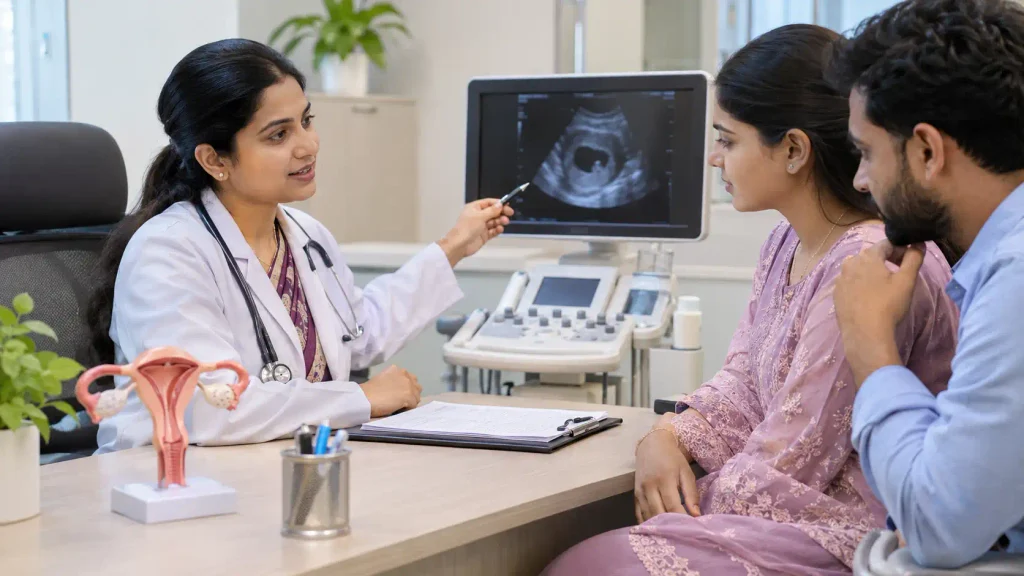
Treatment depends on whether you are clinically stable, your symptoms, scan findings, beta-hCG levels and personal circumstances. The options are expectant management, methotrexate and surgery. All end the pregnancy, because it cannot continue safely.
Expectant Management
Doctors may monitor carefully selected women who are stable, with minimal symptoms and falling hormone levels, without treatment. The pregnancy may resolve naturally. This needs regular blood tests, clear safety advice, and reliable follow-up.
Methotrexate Injection
Methotrexate is a medicine that stops the pregnancy cells from growing. It may suit selected women with an unruptured ectopic pregnancy who are stable. Your doctor will check blood tests, including liver and kidney function, before treatment.
Follow-up blood tests confirm that hormone levels are falling. Side effects can include abdominal pain, nausea, and mouth ulcers. Some women need a further dose or surgery if it does not work. Your clinician will also advise on how long to delay conception afterwards.
Surgical Treatment
You need surgery if the tube has ruptured, bleeding is significant, you are unwell, or other options are unsuitable. Surgeons usually operate by laparoscopy (keyhole surgery) under general anaesthesia.
- Salpingectomy removes the affected tube.
- Salpingostomy opens the tube to remove the pregnancy and conserves it. Surgeons may consider this in selected cases, but you may occasionally need further treatment.
In emergencies, open surgery may be necessary.
Methotrexate vs Surgery vs Expectant Management: What Is the Difference?
Clinical assessment, not preference alone, decides the right approach. Your doctor will explain which options are safe for you and why.
| Treatment Approach | When It May Be Considered | Follow-Up Requirements | Important Considerations |
|---|---|---|---|
| Expectant management | Stable, few or mild symptoms, low and falling beta-hCG | Regular blood tests and quick access to care | Some women still need medicine or surgery later; small risk of rupture |
| Methotrexate | Stable, unruptured pregnancy, suitable blood test results | Blood tests until hormone levels fall; reliable contact | Not suitable for everyone; side effects possible; delay conception as advised |
| Surgery | Rupture, significant pain or bleeding, instability, or other options unsuitable | Post-operative review; hormone checks if the tube is conserved | Most definitive; tube may be removed; recovery time varies |
How Long Does Recovery Take After Ectopic Pregnancy Treatment?
Recovery varies and cannot be guaranteed. Physical recovery may take days to weeks, and emotional recovery often takes longer. Follow-up testing is essential until your doctor confirms treatment has worked.
- Expectant management: Blood tests continue until hormone levels fall to a non-pregnant level.
- Methotrexate: Expect several weeks of blood tests. Cramping and light bleeding are common.
- Laparoscopic surgery: Many women go home within a day or two and recover over a few weeks.
- Open surgery: The hospital stay and recovery are usually longer.
Seek review if pain worsens, bleeding increases, or you feel faint after any treatment. Pregnancy loss can bring grief, anxiety, or relief, and all are normal. Counselling and support groups can help.
Can You Have a Healthy Pregnancy After an Ectopic Pregnancy?
Many women conceive naturally again and have a healthy pregnancy in the uterus. Outcomes depend on tubal health, the treatment you had, and your age. The risk of another ectopic pregnancy is higher, so early assessment matters.
Removing one tube does not automatically cause infertility, as the other tube may work normally. Some women need fertility treatment. Nobody can promise an outcome.
In future pregnancies:
- Do an early pregnancy test and contact your doctor promptly.
- Ask for an early scan to confirm the pregnancy is in the uterus.
- Discuss your history and fertility plans with a gynaecologist.
When Should You Consult a Gynaecologist?
See a doctor promptly for early pregnancy pain, bleeding or a history of ectopic pregnancy. Urgent assessment is not the same as an emergency. Rupture symptoms need hospital care at once.
Arrange prompt evaluation if you have:
- A positive pregnancy test with abdominal or pelvic pain.
- Unusual bleeding in early pregnancy.
- A previous ectopic pregnancy and a new positive test.
- Ongoing symptoms and a pregnancy that cannot yet be located.
- Concerns about fertility after an ectopic pregnancy.
Frequently Asked Questions About Ectopic Pregnancy
How early can ectopic pregnancy symptoms appear?
Symptoms commonly begin between the fourth and twelfth weeks of pregnancy, often around six weeks. Some women notice nothing until an early scan, while others develop pain or bleeding soon after a missed period. Timing varies widely.
Can an ectopic pregnancy cause a positive pregnancy test?
Yes. The body still produces pregnancy hormones, so urine and blood tests are usually positive. The test shows you are pregnant but cannot show the location. A scan and repeat blood tests are needed.
Can ectopic pregnancy resolve without surgery?
Sometimes. Doctors may monitor selected, stable women with minimal symptoms and falling hormone levels, and the pregnancy can resolve naturally. Others receive methotrexate. This is safe only with close monitoring and prompt access to care.
Is methotrexate always effective for ectopic pregnancy?
No. It works for many suitable women, but some need a second dose or surgery. Eligibility depends on stability, scan findings and blood results. Regular follow-up tests are essential to confirm hormone levels are falling.
Can an ectopic pregnancy be moved into the uterus?
No. Doctors cannot move an ectopic pregnancy to the uterus, and it cannot continue safely. This is why it always needs treatment, whether by observation, medicine or surgery, to protect your health.
Can I become pregnant naturally after ectopic pregnancy treatment?
Many women do. Your chances depend on tubal health, age, previous history and the treatment you had. Your doctor will advise when to try again, and you should seek an early scan in any new pregnancy.
What happens if an ectopic pregnancy ruptures?
The fallopian tube can tear and cause heavy internal bleeding. This may bring sudden severe pain, shoulder-tip pain, fainting or shock. It needs emergency treatment, usually surgery, and sometimes a blood transfusion.
Conclusion
Recognising early symptoms and seeking timely evaluation are the most important steps in ectopic pregnancy care. Diagnosis can take a little time, but modern scans, blood tests and treatment options are effective. With appropriate follow-up and emotional support, most women recover well, and many go on to have healthy pregnancies.
If you have a positive pregnancy test with pain or bleeding, or are worried about your fertility, consult a qualified gynaecologist without delay.