
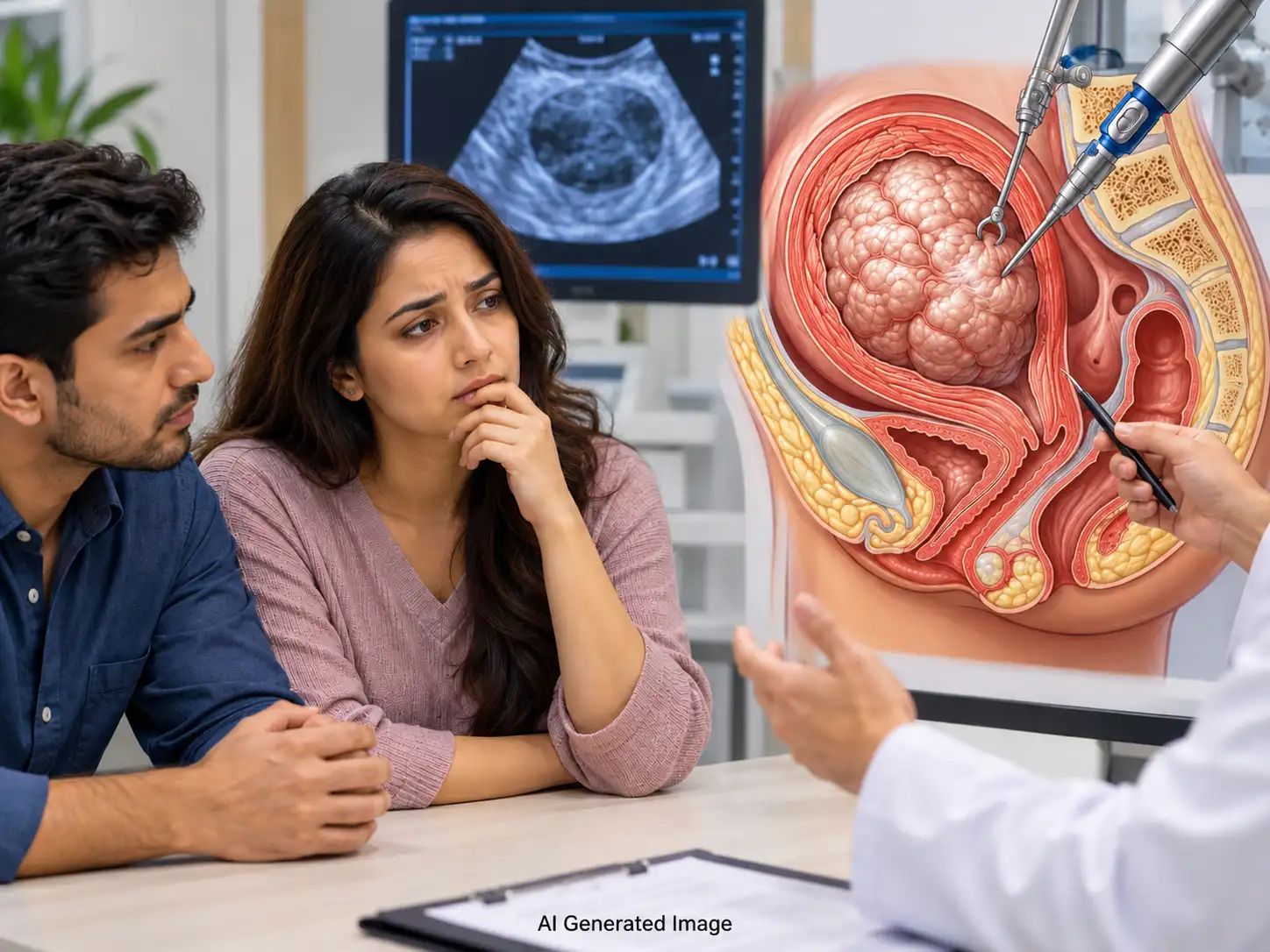
“I’ve been told my fibroid is 12 cm. Is it too big for robotic surgery?” No, size alone does not rule out robotic surgery.
The decision depends on the fibroid’s size, number, and location, as well as the surgeon’s experience.
A 12 cm fibroid is roughly grapefruit-sized, although comparisons vary. The uterus may be comparable in size to one at 14–16 weeks of pregnancy, but this estimate should be confirmed with the treating gynaecologist/robotic surgeon!
Today’s discussion explains how fibroid size, location, and surgical expertise influence eligibility for robotic surgery.
Is There a Size Limit for Robotic Fibroid Surgery?
There is no absolute rigid size limit.
Suitability depends on the available working space, the fibroid’s characteristics and the surgeon’s experience.
Larger growths can reduce visibility and limit space for surgical instruments. The surgeon may need to adjust the position of the small abdominal openings to access the uterus safely.
The approach is assessed individually:
- Smaller: Access may be less challenging.
- Larger: May restrict visibility and movement.
- Very large: May require a different surgical approach.
- Complex cases: Depend on location and uterine anatomy.
The final decision should follow an assessment of the scan results, surgical complexity, and the patient's individual circumstances.
Does the Number of Fibroids Matter More Than the Size?
Neither the number nor the size of fibroids matters as much as their location and the symptoms they cause.
Here’s a Comparison Table
| Surgical Factor | 12 cm Fibroid | Ten 3 cm Fibroids |
| Incisions and Repair | May require one main incision and uterine repair | May require multiple incisions and more extensive reconstruction |
| Operating Time | Depends on depth and location | May take longer due to multiple removals |
| Blood Loss Risk | Depends on vascularity and surgical complexity | May increase with multiple incision sites |
Note: Multiple fibroids can affect uterine structure and make uterus-preserving surgery more challenging.
How Does The Location of the Fibroid Change the Surgery Plan?
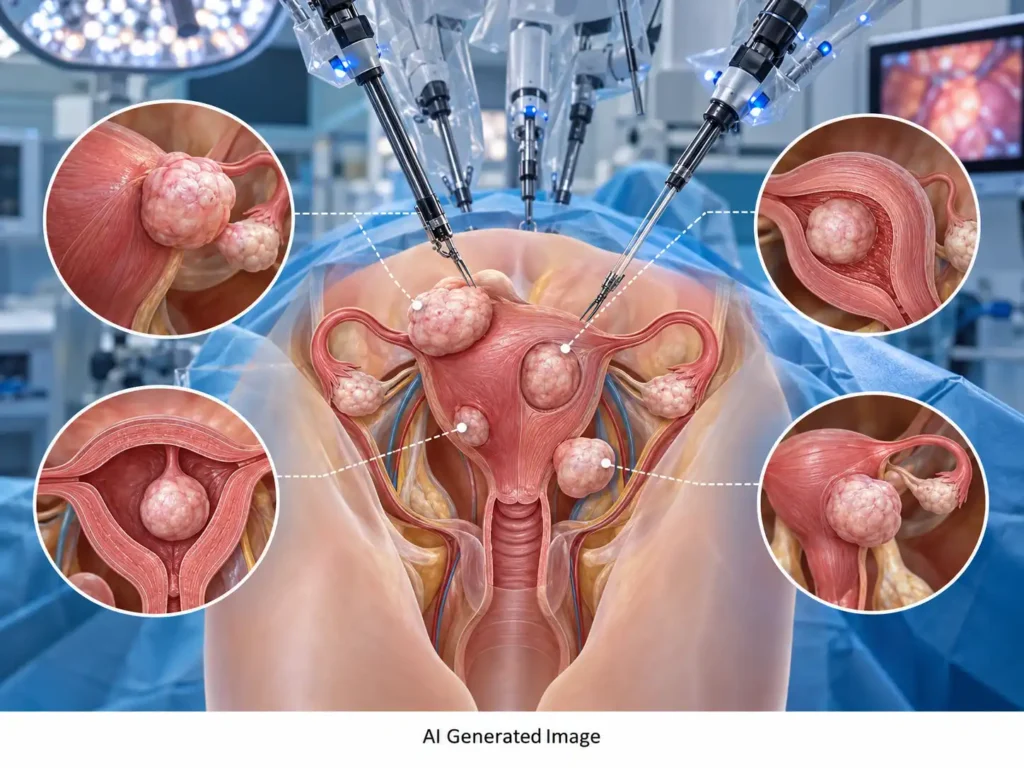
The location of a uterine fibroid directly determines the surgical approach, dissection technique, and risk management strategy for a robotic myomectomy. Surgeons must tailor their plan to ensure complete removal while preserving the uterine wall and protecting surrounding organs.
Fibroids on the outer wall (subserosal)
These fibroids project outward and are typically the easiest to remove robotically because they are highly visible and accessible. The surgeon focuses on safely separating the fibroid's stalk or base from the uterine surface with minimal deep tissue cutting.
This approach significantly reduces the need for extensive uterine wall reconstruction.
Fibroids inside the muscle wall (intramural)
Embedded deep within the uterine muscle, these fibroids require the surgeon to incise the healthy myometrium to shell them out. The robotic plan focuses heavily on precise multilayer suturing to repair the deep defect and restore uterine strength.
Managing blood loss during the dissection phase is a primary concern for the surgical team.
Fibroids inside the uterine cavity (submucosal), which may need hysteroscopy
As these fibroids grow inside the cavity, a robotic approach from the abdomen is rarely the primary choice. Instead, surgeons often pivot to a transcervical hysteroscopic myomectomy, which avoids abdominal incisions entirely.
If a robotic approach is used alongside hysteroscopy, it is typically to manage complex, deeply invading components.
Fibroids in the cervix or broad ligament, which are closer to the ureter and major vessels
These complex locations require meticulous retroperitoneal dissection due to their extreme proximity to critical anatomy. The robotic plan prioritises mapping and isolating the ureters and uterine arteries before beginning the removal.
This careful mapping prevents accidental vascular injury or urinary tract damage.
Why Is The Uterus Sometimes Removed in Small Pieces Inside a Bag?
A large uterus or fibroid cannot fit through a standard 5 mm to 15 mm laparoscopic keyhole incision. To avoid making a large open abdominal scar, surgeons cut the tissue in small pieces.
What is contained morcellation?
It is a technique where the uterus is placed inside a secure surgical bag within the abdomen. Once isolated, the tissue is cut into smaller pieces so it can be safely pulled out through a tiny incision.
Is it safe?
Yes, when protective protocols are followed. The bag prevents cells from spilling. A small risk of an unsuspected sarcoma (cancer) exists, which is why pre-operative evaluation matters.
Numbers Don’t Lie
- 1 in 352 (or 1 in 225 to 1 in 580): The estimated risk that a woman undergoing surgery for presumed benign fibroids actually has a hidden, unsuspected uterine sarcoma.
- 1 in 1,100 (or 1 in 495 to 1 in 1,100): The specific estimated risk that the hidden condition is a leiomyosarcoma, a particularly aggressive subtype of uterine cancer.
[Source]
When is the specimen removed whole instead?
If a patient has high-risk features or is postmenopausal, the uterus is removed whole to prevent cancer spread. It is pulled intact through the vagina or through a slightly larger mini-laparotomy incision.
What Does the Doctor Check Before Deciding on Robotic Surgery?
The doctor reviews imaging, medical history, general health and reproductive plans before recommending an approach.
- Ultrasound or MRI: Maps size, number and location.
- Haemoglobin: Checks for anaemia before surgery.
- Endometrial sampling and Pap smear: Performed when indicated.
- Age and fertility plans: Help guide treatment choices.
- Previous surgery: Includes Caesarean sections and abdominal operations.
- Body weight and general health: Help assess surgical and anaesthetic risks.
- Medication: GnRH analogues may be considered to shrink fibroids before surgery.
What does this mean for you?
This pre-operative checklist ensures a robotic approach is the safest option for your specific anatomy.
By thoroughly addressing variables like anaemia, fibroid map locations, and your personal timeline for family planning, your surgical team eliminates guesswork and optimises your recovery.
Robotic, Laparoscopic or Open surgery: Which Suits a Large Fibroid?
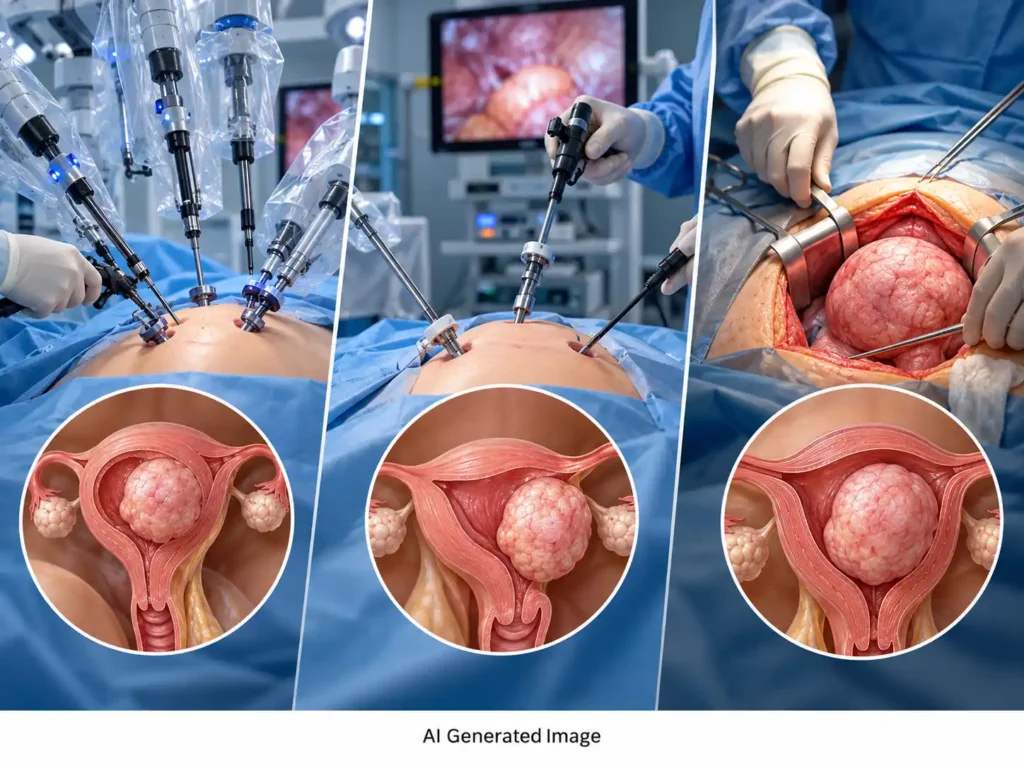
The choice between open, laparoscopic or robotic surgery for a large fibroid depends primarily on its size, number and location, the surgeon’s experience, and the patient’s fertility goals.
Here’s a Comparison Table
| Feature | Open Surgery | Laparoscopic Surgery | Robotic Surgery |
| Incision Size | One larger incision, typically 10–20 cm | Several small incisions, typically 5–15 mm | Several small incisions, often around 8 mm |
| Recovery Time | Typically 4–6 weeks | Often 1–2 weeks | Often 1–2 weeks |
| Fibroid Suitability | Can accommodate very large or complex fibroids | Depends on fibroid size, number and location | May help manage larger or complex fibroids |
| Suturing | Manual suturing | Manual suturing using laparoscopic instruments | Wristed instruments may facilitate precise suturing |
What Non-Surgical Options Help?
Medical therapies, such as GnRH analogues, and Uterine Artery Embolisation (UAE) can help manage fibroids without surgery.
GnRH medicines temporarily suppress hormone production to shrink fibroids, while UAE reduces their blood supply. However, medical benefits may be temporary, and GnRH therapies can cause menopausal-like side effects.
UAE may affect future fertility, and fibroid tissue remains in the body, although treated fibroids typically shrink. The best option depends on symptoms, fibroid characteristics, and future pregnancy plans.
Can I Keep My Uterus And Still Have Children?
Yes, you can preserve your fertility by choosing a myomectomy (which removes only the fibroids) instead of a hysterectomy (which removes the entire uterus).
After a myomectomy, you must observe a strict waiting period of 3 to 6 months to allow the uterine wall to heal completely before conceiving.
As the surgery weakens the uterine tissue, your delivery planning will typically require a planned Caesarean section to prevent uterine rupture during labour.
Always consult your doctor for proper surgical advice.
What Should I Do Next If I’ve Been Told I Have a 12 cm Fibroid?
First, compile all your pelvic scan reports and schedule a specialist consultation. During your appointment, ask the doctor to map out the exact size, number, and location of the masses.
Crucially, ask what the backup plan is if a minimally invasive approach needs to be converted to open surgery.
Don't wait—schedule a consultation with a gynaecologist to discuss whether robotic surgery suits your condition.
Frequently Asked Questions
Is a 12 cm fibroid too big for robotic surgery?
No. A 12 cm fibroid does not automatically exclude minimally invasive surgery. Suitability depends on its location, number, uterine size, surgical complexity and the surgeon’s experience.
How big can a fibroid be before it must be removed?
No fixed size requires removal. Treatment depends on symptoms, growth, pressure on nearby organs, fertility concerns and whether imaging findings require further investigation.
Can a large fibroid be removed without open surgery?
Yes. Robotic or laparoscopic myomectomy may be possible, depending on fibroid characteristics, surgical complexity and expertise. Some cases require open surgery for safe removal.
Is morcellation dangerous? Can it spread cancer?
Yes. Morcellation can spread unsuspected cancerous tissue within the abdomen. Containment reduces tissue dissemination but cannot eliminate all risks. Patient selection and appropriate precautions are essential.
Will I need a blood transfusion for a large fibroid surgery?
Not necessarily. Transfusion risk depends on fibroid size, number, vascularity, preoperative anaemia and blood loss. Blood tests and surgical planning help assess individual requirements.
Can I have a baby after a large fibroid is removed?
Yes. Pregnancy may be possible after myomectomy, depending on uterine healing, remaining fertility factors and surgical findings. Your surgeon will advise when conception is appropriate.
Can a fibroid shrink on its own or with medicines?
Yes. Fibroids may shrink naturally after menopause. Hormonal medicines can temporarily reduce their size, but growth may resume after treatment stops.
What is the difference between myomectomy and hysterectomy for fibroids?
Myomectomy removes fibroids while preserving the uterus, potentially allowing future pregnancy. Hysterectomy removes the uterus permanently, eliminating menstrual periods and the ability to carry a pregnancy.
How long is the hospital stay and recovery after robotic fibroid surgery?
Most patients return home the same day (outpatient/daycare procedure) or stay overnight for up to 24 hours, depending on recovery progress and surgical complexity.
Can a large fibroid turn into cancer?
No. Uterine fibroids are benign growths, and their size alone does not indicate malignancy. Rare uterine sarcomas can resemble fibroids, and imaging cannot always distinguish them reliably before surgery.
……………………………………………………………………………………………………
Medical Disclaimer:
This content is for educational purposes only and does not replace professional medical advice, diagnosis, or treatment