

Labour pain is one of the biggest concerns for many expectant mothers. A painless delivery is not a separate birthing method. It generally means a vaginal birth in which pain relief, usually an epidural, is used to make labour more comfortable.
The uterus still contracts, the cervix still dilates, and the baby still passes through the birth canal. The main difference is how the mother experiences pain during the same process of labour.
Understanding the key differences between painless vs normal delivery can help expectant mothers make an informed choice when considering their options.
What Exactly Is a Regular (Normal) Vaginal Delivery?
A normal vaginal delivery is giving birth through the vagina without major surgery, usually between 37 and 42 weeks. It occurs when uterine contractions open the cervix, allowing the baby to move through the birth canal and be delivered through the vagina.
The process generally involves three stages:
Stage 1: Active Labour and Cervical Dilation
- Regular contractions become stronger and more frequent.
- The cervix gradually dilates to 10 centimetres.
Stage 2: Pushing and Delivery
- Once the cervix is fully dilated, the mother pushes during contractions.
- The baby moves through the birth canal and is delivered through the vagina.
Stage 3: Delivery of the Placenta
- Mild contractions help separate the placenta from the uterus.
- The placenta is then delivered through the vagina.
In a regular delivery, no epidural or anaesthesia is used, so the mother experiences the full sensation of contractions and pushing.
What Is Painless Delivery & How Does It Work?
It refers to a normal vaginal birth with regional anaesthesia. This can reduce labour pain by around 75% to 80% by blocking nerve signals from the uterus and lower body to the brain.
The mother remains awake and alert and can actively push during delivery.
H3: How the Procedure Works
- Active labour timing: Providers usually administer the medication during active labour, often around 3 to 4 centimetres of cervical dilation.
- Back numbing: An anaesthesiologist cleans the lower back and injects a local anaesthetic to numb the area.
- Catheter placement: A needle is guided into the space around the spinal nerves, and a thin, flexible catheter is passed through it.
- Needle removal: The needle is removed, leaving the catheter securely taped to the back.
- Nerve signal blocking: Medication delivered through the catheter blocks pain signals travelling from the uterus to the brain.
- Onset of effect: The desired effect typically begins within 10 to 15 minutes of administering the medication.
- Contractions and participation: Uterine contractions continue, allowing the mother to remain conscious and participate in the birth.
For women considering painless normal delivery services, understanding how the procedure works can help them make an informed decision.
Is the Birthing Process Itself Different, or Just the Pain Relief?
The basic process of vaginal birth remains the same whether pain relief is used or not. The difference is primarily in how labour pain is managed.
In both situations:
- Stages of labour: Cervical dilation, pushing and birth, and delivery of the placenta occur in both cases.
- Vaginal delivery: The baby moves through the birth canal and is delivered vaginally in both types of birth.
- Physical process: Uterine contractions, cervical dilation, pushing, and delivery follow the same basic process.
- Pain experience: The approach to managing labour discomfort differs between the two options, while the overall process of vaginal birth remains the same.
- Mother's participation: The mother remains conscious and can actively participate in childbirth in both situations.
Bottom Line: Choosing painless delivery does not mean choosing an easier or different type of birth. It is the same vaginal birth with pain-management support.
Does Painless Delivery Actually Mean Zero Pain?

No. It means labour pain is significantly reduced and easier to manage. You may still feel contractions, but the pain is usually much lower.
What You Feel
- Pain is significantly reduced, though it may not disappear completely.
- Noticeable tightening or contraction sensations.
- Pressure can be felt as the baby moves down the birth canal.
- The urge to push usually remains during delivery.
- You stay awake and alert throughout the birth.
What Are the Benefits of Choosing an Epidural for Labour?
It can provide several benefits during labour and delivery.
Reduced exhaustion
Reducing labour pain can help the mother rest, conserve energy, and cope better with prolonged or physically demanding labour.
Greater calm and focus
Effective pain relief can help the mother stay calmer, more focused, and mentally present throughout labour and birth.
Pelvic muscle relaxation
Can relax pelvic muscles, which may sometimes help the baby descend more smoothly as labour progresses.
Useful during emergency C-section
If an emergency painless C-section delivery becomes necessary, existing regional pain medication can often be extended to provide the required surgical numbness.
This option is not required for every vaginal birth. The choice should be based on individual circumstances, medical suitability and personal preferences.
Are There Side Effects or Risks With Epidural Anaesthesia?
Yes. It can cause common side effects such as low blood pressure, shivering, and itching, while serious complications such as severe spinal headache, temporary nerve weakness, or infection are rare. [Source].
Temporary blood pressure changes
A temporary drop in blood pressure can occur during labour and is usually mild. The maternity team monitors it closely so they can identify and manage any significant changes promptly.
Mild soreness
Some women may experience mild soreness or tenderness around the injection site. This generally settles on its own and does not usually cause lasting problems.
Occasional itching
Temporary itching can occur depending on the medicines used. It is generally mild and tends to resolve as the medication wears off.
Rare but serious complications
Infection, bleeding around the spine, severe headache or nerve damage are uncommon complications. Their risk is low when the procedure is performed correctly with appropriate monitoring.
Long-term back problems
This procedure is not shown to cause long-term back problems. Temporary soreness around the injection site may occur but generally improves without lasting effects.
The decision should be based on individual medical assessment, preferences, and discussion with the obstetric and anaesthesia teams.
Does an Epidural Affect Labour Duration or the Baby?
Yes. It may extend the pushing stage of labour by about 15–30 minutes, but it does not significantly lengthen the dilation phase or harm the baby. Temporary blood pressure changes can occur, but staff closely monitor and manage them during labour.
- First stage: It does not appear to significantly change cervical dilation time.
- Second stage: The pushing phase may be longer because pain and the urge to push are reduced.
- Delivery type: Assisted vaginal delivery may be slightly more likely, but this does not mean a C-section is required.
- Apgar scores: Most babies have normal Apgar scores.
- Early effects: Some babies may show temporary differences in alertness, muscle tone or early feeding.
- Breastfeeding: Research has not established a significant long-term difference in breastfeeding success.
Overall, this approach can provide effective comfort during labour without major adverse effects on newborn health. [Source].
Is Painless Delivery Safe for All Pregnant Women?
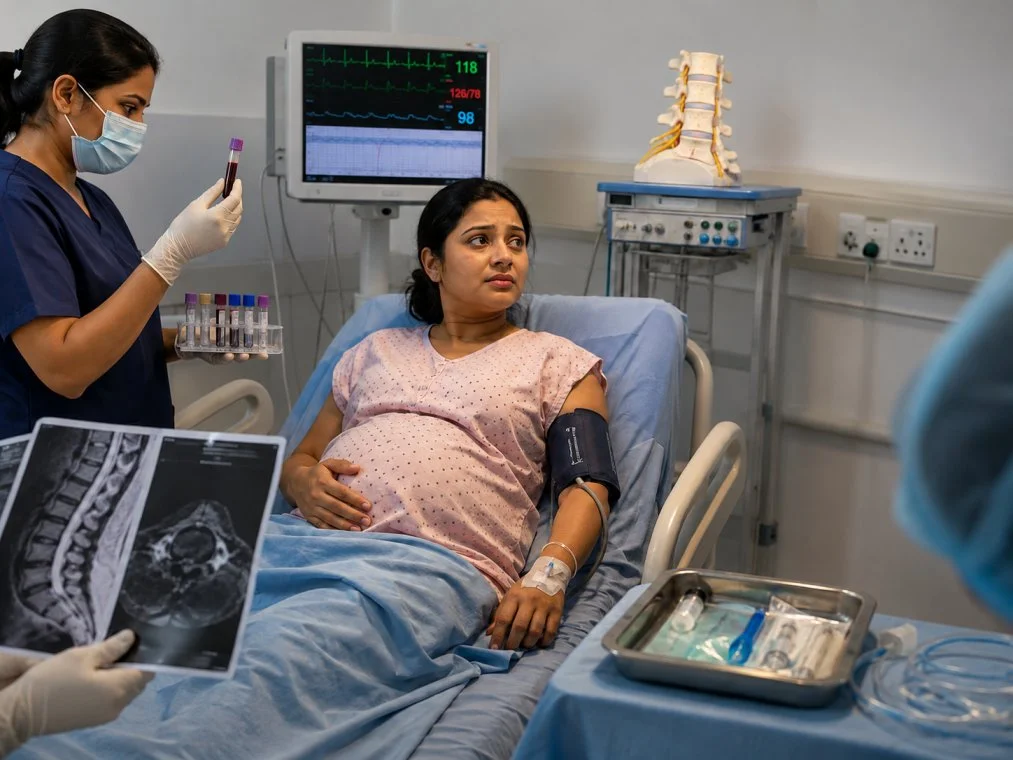
No. The procedure is generally safe for most pregnancies, but may not be suitable for all expectant mothers
Suitability is assessed case by case, particularly when support for high-risk pregnancies is needed based on the mother’s health, medical history, and labour circumstances.
- Individual assessment: The obstetrician and anaesthesiologist evaluate the mother before recommending this option.
- Spinal conditions: Certain spinal abnormalities or previous spinal procedures may affect eligibility.
- Bleeding disorders: Clotting problems or some blood-thinning medications may make it unsuitable.
- Infections: An infection at the injection site or certain systemic infections may prevent its use.
- Medical advice: During antenatal care and pregnancy check-ups, discuss your options with your obstetrician and anaesthesiologist before deciding.
How Do You Decide Between Painless and Regular Vaginal Delivery?
It depends on your pain tolerance, medical history, preferences, and labour progress.
Quick Comparison
| Factor | Natural Birth | Painless Birth |
| Pain Experience | Labour sensations are experienced without medication | Discomfort is reduced, though pressure may remain |
| Pain Tolerance | May suit those comfortable with stronger labour sensations | May suit those seeking greater comfort during contractions |
| Previous Delivery | Previous birth may influence your preference | Previous birth may influence your decision |
| Mobility | Usually allows greater movement during labour | Movement may be more restricted after medication |
| Medical Intervention | No additional medication required | Requires medication and appropriate monitoring |
| Availability | Does not require specialist availability | Requires specialist support and suitable facilities |
There is no universally better choice between painless vs normal delivery. Discuss your options with your obstetrician and choose the best approach.
Considering other delivery options?
Read our comparison between painless delivery and C-section to understand how vaginal and surgical birth differ.
Key Takeaways: Painless Delivery vs Normal Delivery
- Same birth process: Both involve the normal stages of vaginal childbirth.
- Different pain management: The two approaches differ mainly in how they manage labour discomfort.
- Sensation can remain: Discomfort may be significantly reduced, but you may still feel pressure and other sensations.
- Individual choice: The suitable approach depends on your health, preferences, and labour circumstances.
Ready To Discuss Your Options? Consult Dr Pallab Roy, a painless normal delivery doctor in Kolkata, today.
People Also Ask
Can you still feel contractions with an epidural?
Yes. You may still feel contractions as pressure, tightening, or a sensation of the uterus working, but their intensity is substantially reduced. These sensations can help the mother recognise when to push.
How long does it take for an epidural to start working?
It generally takes about 10–15 minutes to begin taking effect after administration. The timing can vary depending on the individual and their response to the medication.
Can you walk or move around after getting an epidural?
Movement depends on the medication used, its strength, hospital protocol, and clinical monitoring. The maternity team can advise whether walking, changing positions or remaining in bed is appropriate.
Does an epidural increase the chance of needing a C-section?
Current evidence does not show that appropriately administered regional medication during labour increases the likelihood of Caesarean delivery when labour is properly supervised.
Is painless delivery more expensive than a regular normal delivery?
Overall cost can vary based on the consultation, hospital package, medications, monitoring, procedure-related charges, and length of stay. Discuss the expected costs with your maternity-care team beforehand.
Can every hospital offer painless delivery, or does it need special staff?
Not every hospital provides this option. It requires trained specialists, appropriate monitoring equipment, and an obstetric team experienced in managing labour with regional medication.
Does an epidural affect breastfeeding after birth?
It does not generally prevent breastfeeding after delivery. Feeding outcomes can also depend on maternal recovery, newborn condition, early skin-to-skin contact and breastfeeding support provided after birth.
At what stage of labour can you request an epidural?
The appropriate timing depends on labour progress, maternal condition, cervical changes, and hospital protocols. Discuss your preference during antenatal visits so the maternity team can plan accordingly.