

Two or more miscarriages aren’t just “bad luck” anymore—they’re medically defined as recurrent pregnancy loss and deserve answers, not guesses. This is the point where your doctor shifts from reassurance to investigation. The next step is a targeted evaluation to uncover treatable causes and plan a safer, stronger path to your next pregnancy.
Under Dr Pallab Roy, couples seeking recurrent miscarriage treatment in Kolkata receive a structured investigation aimed at identifying causes and improving the chances of a healthy pregnancy.
Why Repeated Miscarriages Need Structured Medical Evaluation
Many couples quietly carry guilt, fear, and the constant question: Why do miscarriages keep happening? Those emotions are valid. The truth is: Repeated miscarriages are rarely random—they often signal an underlying issue that needs clear identification. A structured medical evaluation helps pinpoint the cause early and guides the right treatment to improve future pregnancy outcomes.
What structured evaluation changes
This structured shift transforms scattered symptoms into a clear, evidence-based path forward.
- Moves focus from blame to biology
- Identifies treatable medical causes early
- Prevents repeated uncertainty and waiting
- Creates a clear, step-by-step recovery roadmap
What is Recurrent Miscarriage (Medical definition explained simply)
The recurrent miscarriage meaning entails two or more consecutive pregnancy losses before 20 weeks. It’s not considered random anymore. At this stage, doctors treat it as a medical condition that needs proper evaluation to find the cause and improve future pregnancy chances.
Why doctors take repeated pregnancy loss seriously
Repeated miscarriage signals an underlying biological issue that may be treatable. Early recognition prevents avoidable future loss.
- Pattern recognition
Two consecutive miscarriages signal a clinical pattern that requires structured investigation rather than reassurance alone.
- Identifying treatable causes
Many cases reveal correctable factors, such as hormonal imbalances, uterine structural abnormalities, or immune conditions.
How common is recurrent miscarriage?
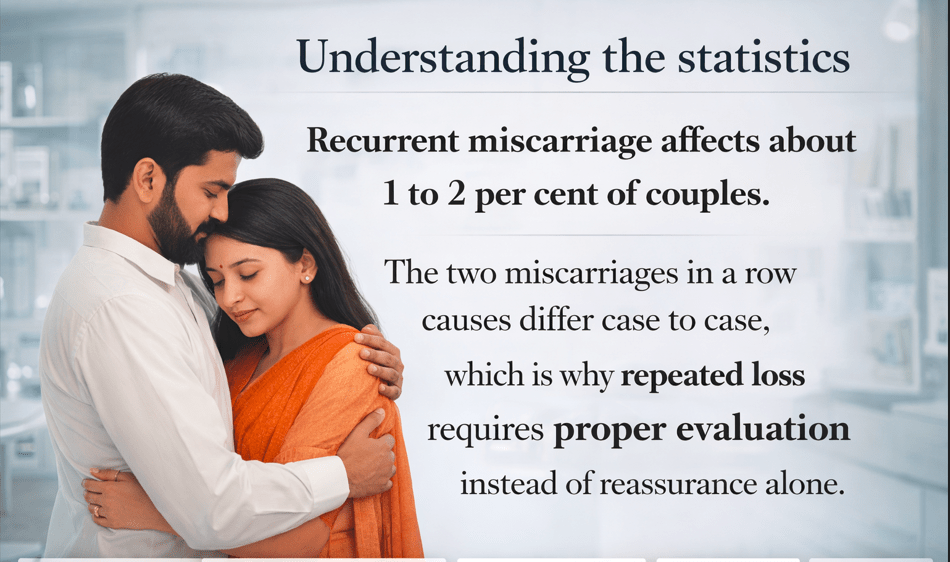
Recurrent miscarriage is relatively uncommon, affecting about 1–2% of couples trying to conceive. While a single loss is sadly common, repeated losses are a clear signal for medical evaluation—not just chance.
While sporadic miscarriage is common, affecting 12–15% of recognised pregnancies, recurrent pregnancy loss (RPL) is a distinct and less frequent condition. [Source]
Early access to recurrent miscarriage treatment ensures positive outcomes.
Why do most couples still have successful pregnancies later
Most miscarriages happen due to one-time factors, not permanent problems. When underlying causes are identified and treated—or when no serious issue is found—the chances of a healthy pregnancy remain high. With the right evaluation and care, success is far more common than failure.
What Causes Recurrent Miscarriage?
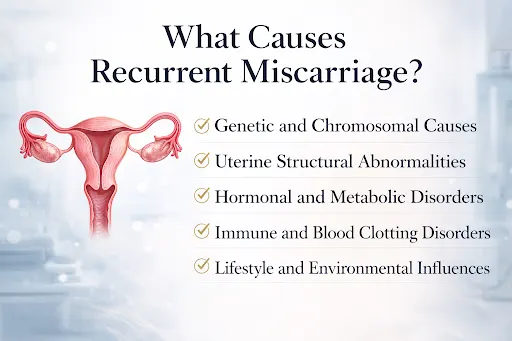
Recurrent miscarriage is usually not random—it often stems from identifiable medical factors. Common causes include genetic abnormalities, hormonal imbalances, uterine structural issues, immune disorders, or blood-clotting conditions.
In some cases, no clear cause is found—but even then, outcomes can improve with the right medical support and monitoring.
Genetic and Chromosomal Causes
The genetic causes of recurrent miscarriage often involve chromosomal imbalance that prevents normal embryo development.
These abnormalities usually occur silently and cannot be predicted without testing, which is why genetic screening is a standard part of recurrent miscarriage treatment.
- Embryo chromosomal abnormalities
Most early miscarriages occur when the embryo has missing or extra chromosomes, making survival impossible.
- Parental genetic factors
A balanced chromosomal rearrangement in a parent can destabilise embryo formation.
- When genetic testing is recommended
Testing is advised after two consecutive miscarriages to guide future pregnancy planning and targeted care.
Uterine Structural Abnormalities
Structural abnormalities in the uterus can interfere with implantation and early fetal growth. The miscarriage risk due to uterine abnormalities increases when the uterine cavity cannot properly support pregnancy.
Identifying these issues is essential because many are correctable through targeted procedures included in Dr Pallab Roy’s recurrent miscarriage treatment in Kolkata.
- Septate uterus
A septum is a wall of tissue inside the uterus that reduces the blood supply to the embryo and raises the risk of miscarriage.
- Fibroids or polyps
Growth within the uterine cavity can distort the space and disrupt implantation.
- Cervical incompetence
A weakened cervix may open too early in pregnancy, leading to second-trimester loss without warning.
Hormonal and Metabolic Disorders
Hormonal balance is critical for sustaining early pregnancy. Disorders affecting metabolism or reproductive hormones can quietly increase miscarriage risk. These conditions are routinely screened during evaluation because they are often treatable through precise medication and monitoring.
- Thyroid disorders
Both underactive and overactive thyroid function disrupt embryo development and implantation.
- PCOS
Polycystic ovarian syndrome affects ovulation quality and hormone stability, raising the risk of early loss.
- Uncontrolled diabetes
High blood sugar impairs early placental development and increases the risk of complications.
- Progesterone deficiency
Low progesterone weakens uterine support, making early pregnancy harder to maintain.
Immune and Blood Clotting Disorders
Some miscarriages occur because the immune system or clotting pathways interfere with placental blood flow. The autoimmune causes of recurrent pregnancy loss are medically significant but often manageable when detected early.
Screening for immune and clotting disorders is therefore a key step in recurrent miscarriage treatment.
- Antiphospholipid syndrome
This condition triggers abnormal clot formation in the placenta, blocking nutrient supply to the embryo.
- Autoimmune conditions
Immune system misfiring can affect how the body accepts and supports pregnancy.
- Thrombophilia disorders
Inherited clotting tendencies increase the risk of placental circulation failure and early loss.
Lifestyle and Environmental Influences
Daily habits and environmental factors can influence pregnancy stability. During a repeated pregnancy loss evaluation, lifestyle risks are reviewed because they are modifiable and medically relevant.
- Smoking –Tobacco toxins impair placental development and oxygen delivery.
- Alcohol- Alcohol disrupts early fetal growth even in small amounts.
- Obesity- Excess weight alters hormone and inflammatory balance.
- Stress and poor nutrition- Chronic stress and nutrient deficiency weaken reproductive health.
When should investigations start after miscarriages?
Medical evaluation should begin after two consecutive miscarriages, as this meets the definition of recurrent pregnancy loss.
Early investigation helps identify treatable causes sooner and guides the right recurrent miscarriage treatment to reduce future risk. Waiting for more losses is no longer recommended when proactive care can improve outcomes.
Why does evaluation often begin after two losses
Two losses form a medical pattern that justifies structured testing.
Situations where early testing is advised
To decide ‘when to see a fertility specialist after miscarriage?’ consider these situations.
- Age factors- Women over 35 benefit from faster evaluation.
- Known medical conditions- Existing hormonal or immune disease warrants early testing.
- IVF or assisted pregnancy history- Repeated assisted pregnancy failure requires immediate assessment.
What tests are recommended for recurrent miscarriage?

A targeted evaluation is done to find the exact cause, not random testing. Common tests after recurrent miscarriage include genetic screening, hormone levels, uterine imaging, and blood tests for immune or clotting disorders.
Genetic testing for parents
Chromosomal analysis detects silent rearrangements affecting embryo viability.
Uterus imaging tests
Imaging evaluates structural problems inside the uterus:
- Ultrasound
- Hysteroscopy
- MRI if required
Hormonal and blood tests
Hormone panels identify thyroid, metabolic, and progesterone imbalance.
Immune and clotting disorder screening
Blood tests detect treatable immune and thrombosis conditions.
Treatment options for recurrent miscarriage
Treatment is personalised and guided by diagnosis. Dr Pallab Roy’s recurrent miscarriage treatment in Kolkata focuses on correcting medical causes rather than offering generic reassurance.
Treating hormonal imbalance
Medication stabilises –
- Thyroid
- Glucose
- And progesterone levels.
This helps support pregnancy.
Surgical correction of uterine abnormalities
Minor procedures can
- Restore normal uterine structure
- And implantation conditions
Blood thinner or immune therapy when indicated
Targeted therapy prevents
- Clotting
- And immune-related placental damage
Lifestyle modification support
Weight control, nutrition, and habit changes strengthen reproductive health.
Chances of a healthy pregnancy after recurrent miscarriage
The outlook after recurrent miscarriage is often more hopeful than couples expect. With proper diagnosis and care, a future pregnancy is achievable.
Success rates explained realistically
Even after two miscarriages, the outlook remains encouraging—around 60% to 75% of couples go on to have a healthy live birth.
Why proper diagnosis improves outcomes
Finding the exact cause allows focused, corrective treatment. This replaces uncertainty with a clear medical strategy.
Importance of high-risk pregnancy monitoring
Early specialist monitoring reduces preventable complications. Close follow-up protects both the mother and the developing pregnancy.
When Is It Safe to Try Again?

Timing the next pregnancy should balance medical safety with emotional readiness. Rushing recovery can increase stress, while proper preparation improves outcomes.
- Physical recovery timeline: Most women recover within weeks; medical clearance confirms readiness.
- Emotional readiness: Grief healing varies and shouldn’t be rushed.
- Pre-pregnancy optimisation: Addressing medical issues and providing preconception care reduces avoidable pregnancy risks.
Warning Signs in Early Pregnancy After Previous Loss
Prior loss increases vigilance — not inevitability. Recognising warning signs quickly allows faster intervention and reassurance.
- Vaginal bleeding- Any bleeding in early pregnancy needs prompt medical review.
- Severe cramps –Persistent pain may signal developing complications.
- Reduced pregnancy symptoms- Sudden symptom loss should not be ignored.
- Urgent medical help is needed when Heavy bleeding, fever, or intense pain requires immediate emergency care.
People Also Ask
Can recurrent miscarriage be cured?
Many causes are fully treatable once correctly identified.
Is two miscarriages normal?
Two consecutive losses justify immediate structured medical evaluation.
Do recurrent miscarriages mean infertility?
No. Many couples conceive successfully after appropriate treatment.
What is the most common cause of repeated pregnancy loss?
Chromosomal abnormalities remain the leading contributor overall.
Should genetic testing be done after two miscarriages?
Yes. Early testing guides prevention and informs every subsequent step.
Can stress cause recurrent miscarriage?
Stress significantly worsens biological vulnerability, but rarely acts alone.
How soon should one consult a high-risk pregnancy specialist?
Immediately after the second loss — or earlier if risk factors exist.
Recurrent Miscarriage Is Not the End of Your Pregnancy Journey
Repetition demands answers, not silence or passive waiting. Early evaluation transforms fear into a clear direction. Recurrent miscarriage treatment in Kolkata with Dr Pallab Roy delivers structured, scientific care guiding couples.